

Businesses Shift Focus to Lead Quality to Cut Rising Paid Advertising Costs
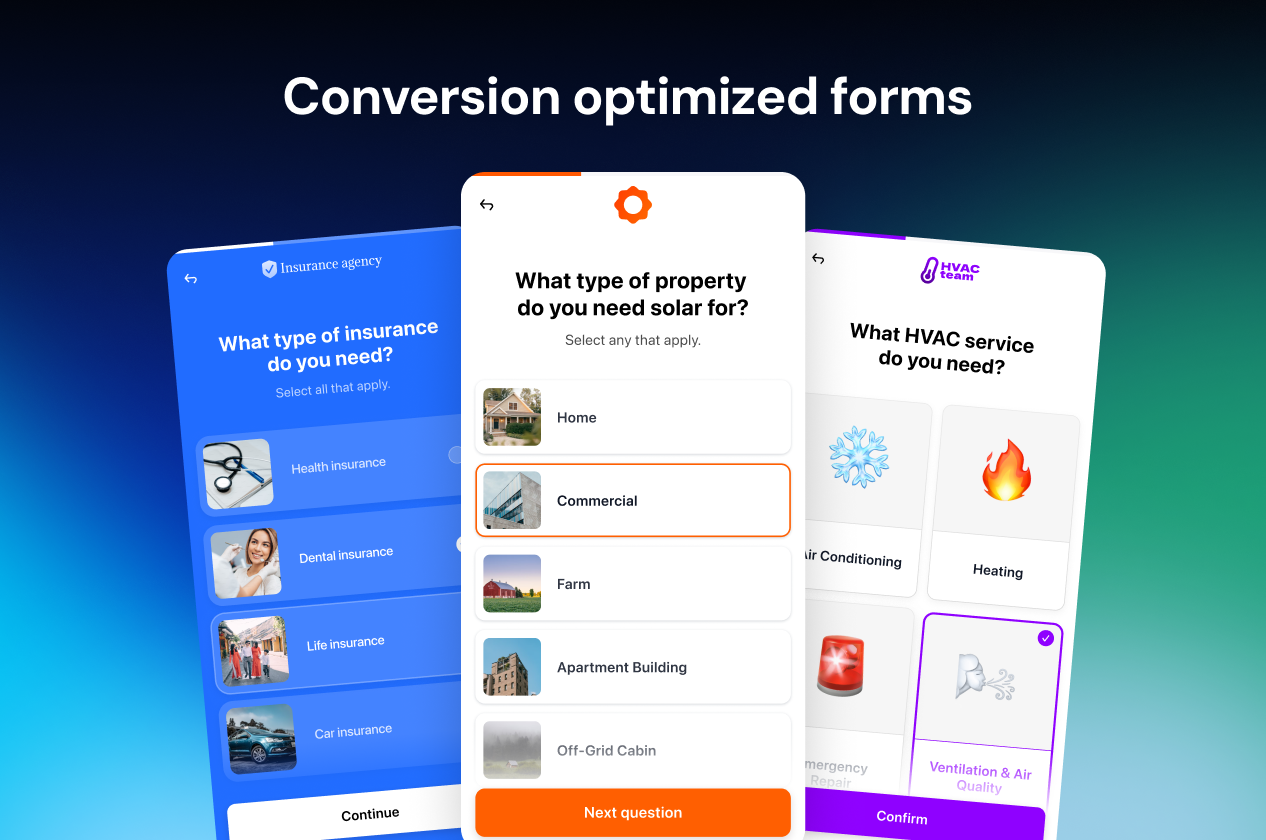
Conversion optimized forms

AI Lead Generation
Companies adopt multi-step lead capture forms and dynamic funnels to reduce wasted ad spend and improve lead quality.
GA, UNITED STATES, January 14, 2026 /EINPresswire.com/ -- Businesses across industries are increasingly rethinking how they allocate paid advertising budgets, as rising cost-per-click rates on platforms such as Google Ads, Facebook, and LinkedIn continue to put pressure on marketing performance.Recent digital marketing benchmarks show that a large portion of advertising spend is lost after the click, often due to poorly designed forms, low completion rates, and unqualified inquiries reaching sales teams. In response, many companies are shifting focus from simply generating more traffic to improving how incoming visitors are filtered and converted.
From traffic volume to funnel efficiency
For years, performance marketing strategies centered on scaling reach and impressions. Today, that approach is becoming less sustainable.
Marketing analysts note that improving the post-click experience can deliver stronger returns than increasing ad budgets, particularly in competitive sectors such as insurance, home services, legal services, SaaS, and renewable energy.
One of the most visible changes is the move away from long, static contact forms toward structured lead capture forms that guide users through shorter, step-by-step interactions.
Multi-step forms as a cost control mechanism
Instead of presenting every visitor with the same list of questions, multi-step forms collect information progressively and adapt based on user responses. This allows businesses to qualify prospects earlier in the process and reduce time spent on leads that are unlikely to convert.
Companies using this approach report improvements in:
Cost per qualified lead
Form completion rates
Lead accuracy and relevance
Sales team efficiency
Campaign attribution and optimization
As a result, lead capture design is increasingly viewed as a financial efficiency tool, not just a user experience decision.
Dynamic form builders enter the marketing stack
Supporting this shift is the growing adoption of dynamic form builder platforms that allow marketing teams to design conditional, adaptive forms without development resources.
One example is Tapform, a no-code dynamic form builder used by businesses to create lead capture forms and multi-step qualification flows for landing pages and advertising campaigns. The platform integrates with advertising and analytics systems such as Google Ads, Meta Pixel, LinkedIn Pixel, and CRM tools, enabling teams to track which campaigns generate qualified leads rather than raw submissions.
Industry observers note that this type of software is increasingly becoming a standard component of modern performance marketing infrastructure, alongside landing page builders, analytics platforms, and automation tools.
A structural change in paid advertising strategy
The broader trend reflects a change in how organizations define success in digital advertising.
Rather than focusing primarily on clicks and impressions, marketing teams are now prioritizing lead quality, conversion efficiency, and downstream revenue impact. As advertising costs continue to rise, funnel optimization and intelligent lead capture are expected to play an even greater role in determining return on investment.
More information on dynamic lead capture technology and multi-step form design is available at https://tapform.com
Matej Rajcic
Tapform
email us here
Visit us on social media:
LinkedIn
Facebook
YouTube
X
How to create lead capture form in Wordpress
Legal Disclaimer:
EIN Presswire provides this news content "as is" without warranty of any kind. We do not accept any responsibility or liability for the accuracy, content, images, videos, licenses, completeness, legality, or reliability of the information contained in this article. If you have any complaints or copyright issues related to this article, kindly contact the author above.
